
The Street Fighter movie has been in theaters for around two weeks and is performing decently even though it has mixed reviews. Critics hate it. Audiences love it. As someone who saw the movie early on a Sunday before the NFL and testify that I ate popcorn, Mr. Pibb, and Buncha Crunch for breakfast, I have to say I’m with the audiences. The 2026 Street Fighter movie is one of the better video game adaptations ever made. Whether you agree with that sentiment or not is up to personal taste. There were a few misfires, like Andrew Schultz being cast as Dan Hibiki, who is supposed to be Japanese with a Hong Kong upbringing. That being said, Kitao Sakurai, who is Japanese, picked him for a reason. Honestly, not going to blame the actor here despite him being an extremely controversial pick for many reasons. He did what he was supposed to do and he did okay as an actor.
In fact, there wasn’t really much wrong with the cast. Everyone did a fine job. However, by the end of the movie, I realized something that people have already been picking up on: Bison wasn’t really the strongest of villains. David Dastmalchian came off less as a menacing dictator and more of a maladjusted child throwing a bunch of tantrums. The fact that the ending made Roman Reigns’ Akuma look somehow weaker by comparison means the biggest problem with the movie is that it didn’t have a real villain.
I’m actually okay with this, and here’s why: neither one of these two are the real big bad of Street Fighter. If a sequel gets made, it looks like it’s going to go one way, but it would honestly be better if Sakurai swerved to bring in Street Fighter III: Third Strike elements. In other words, bring in Gill as the main bad guy.
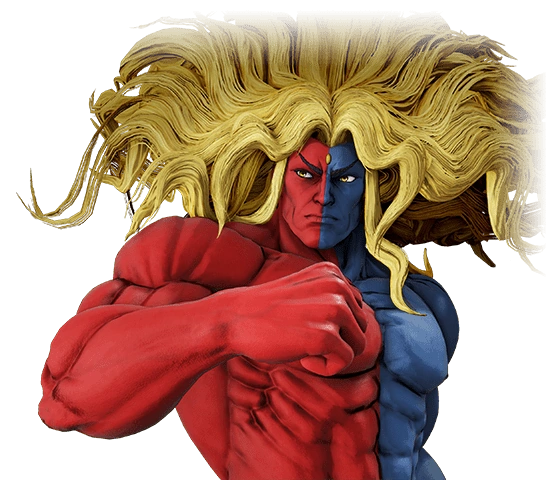
Moreso, I want to see a certain Third Strike character finally get his well-deserved due: the enigmatic and terrifying Q.
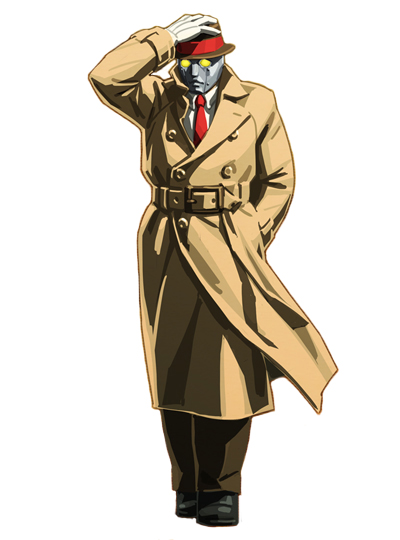
Once again, you get two villains, but Gill’s charisma and Q’s haunting Michael Myers-like presence would be two forces that would make people feel. Sakurai went with the comedy in the first movie, but if he adds just a touch of horror to his work for the second, he’s going to have a much more favorably reviewed film. Q going around chasing people for reasons unknown could easily unsettle the audience, and Gill’s messianic stature would get audiences to wonder if he’s good or evil.
This would technically relegate Bison and Akuma to secondary villains, but based on the current lore of the games, they probably shouldn’t be villains, but anti-heroes. Basically, they would be better off helping the protagonists than beating them. Their powers can help stop the greater forces at work that threaten to destroy the world, specifically the Illuminati and whatever G’s group is.
For this to happen, however, there needs to be a technological time skip. The movie clearly states that the movie is set in 1993, and as timeline fanatics have been pointing out, the events of Third Strike are “supposed” to take place in 1999. Moreso, in Street Fighter V, G, who was pushed heavily as a boss and world threat, is an online streamer. YouTube wasn’t up and running until 2005, which would mean another six years would have to be added to the time skip. So, how do we get a twelve-year time skip to keep the timeline cohesive and matching with the games? Two things: a floating timeline and a little help from Street Fighter’s version of Bill Gates.
A floating timeline, believe it or not, has already been established in the official movie, despite the specific timeframe being given of 1987-1993. 1987 was, of course, the year the first Street Fighter game was released in arcades and 1993 was when Super Street Fighter II: The New Challengers debuted. However, there is one very important detail that people are missing that sets up the floating timeline in the movie: the soundtrack.
In any other movie, the music would be a modern, if anachronistic, aesthetic choice and nothing more (see: Gatsby). In the 2026 Street Fighter movie, it is the key to the future of the series if the developers and producers decide to continue the film franchise, and one song in particular makes this whole thing possible:
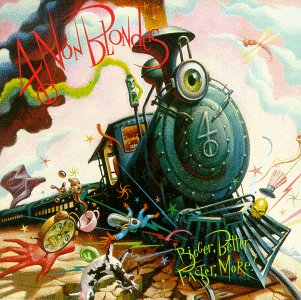
Never in a million years would I have thought to say that 4 Non-Blondes “What’s Up?” is the key to saving the Street Fighter movie franchise, and yet here we are. This song’s placement in the movie sets up the floating timeline as the song was released as a single in our real life timeline in 1993 (and was heard far earlier on the band’s debut album Bigger, Better, Faster, More! https://en.wikipedia.org/wiki/What%27s_Up%3F_(4_Non_Blondes_song)
In the movie, the first World Warrior tournament takes place in 1987, and Ryu is happily listening to it before his fight with Sagat, specifically saying that he likes the song. Six years later, Ken sings the song sadly during a solo karaoke session, then later (SPOILER ALERT) sings the song sadly to try to bring Ryu back to life after his fight with Akuma.
In other words, “What’s Up?” isn’t just some random song choice. It’s the entire heartbeat of the movie! The fact that in real life it was released well after the events of the first Street Fighter game is telling: the floating timeline exists in the movie specifically because of this song and its importance in the actual plot.
The only way to continue the franchise in the future is to use the floating timeline to advance the technology of what was seen in the movie to what we saw in 2005. While in the games Ken Masters comes from a rich family that owns hotels, this isn’t going to be enough to rush in a 12-year technological gap. The only person who has that kind of technology and fortune is Karin Kanzuki.
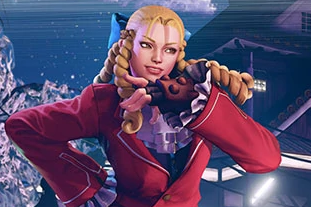
A simple cameo of Karin doing her best Steve Jobs impression with the Kanzuki Zaibatsu version of the iPhone (we can call it the ZaiPhone for mirth) would be enough to usher in the new era of technology that the Street Fighter movie would need to establish Gill, G, and Q (and to a lesser extent, Seth) into the franchise.
Of course we can’t have Karin without Sakura Kasugano and we can’t have Gill, G, and Q without Ibuki, Kolin, and Urien, so add them to the cast, too. By doing this, you now have an expanded story and, more importantly, a direction after Bison’s time as a villain is over. Staying with just the Street Fighter II story does the movie franchise no favors and ensures it goes stale, but if they added Third Strike characters, things will get far more interesting and appeal to the audience and the critics more.
That’s how you make a cinematic universe.


